

Reproducimos la carta de nuestro Director Ejecutivo, Luis Larraín, y la Economista Senior de LyD, Susana Jiménez, publicada en el Wall Street Journal, a raíz de la carta que el Embajador de Chile en Estados Unidos, Juan Gabriel Valdés, envió a este diario previamente.
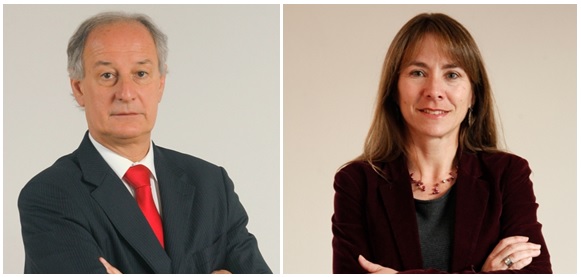 The letter from Chilean Ambassador to the U.S. Juan Gabriel Valdes contained several false statements that deserve to be corrected.
Income inequality in Chile is not among the highest in the world, as the ambassador claimed. It is not even among the worst in the region. The U.N. ranks Chile 12th in income inequality out of 18 countries in the Latin America and the Caribbean. Furthermore, if you adjust for methodological differences with other countries, and as recommended by the Organization for Economic Development and Cooperation, Chile is the third least unequal country out of the 18. A more relevant social welfare indicator is poverty, which as Mr. Valdes wrote, has dropped sharply. In 1990 39% of the population lived in poverty. By 2011 it had fallen to 14%. What he did not say is that this is largely a result of the free market policies implemented and sustained in our country over the last four decades.
It is also untrue that the tax increase was approved unanimously. There were votes against it. Moreover, the seemingly wide support was the result of the governments agreement to moderate the original and very radical proposal, which had the required majorities to pass. Support for the moderated bill was support for the lesser of two evils. The ambassador claims that education reform is aimed at delivering access to free, good quality education. But access to free school education is already guaranteed, as it is in the US. And there is nothing in the education reform that will improve quality.
It is true, as the ambassador wrote that commodity-exporting countries have seen slower growth this year. But Chiles economic growth is among the most disappointing. The Central Bank of Chile and a number of renowned analysts have publicly declared that the downturn in Chile in recent months cannot be entirely blamed on external conditions. This suggests that the proposed reforms are having a negative impact on the economy.
Chile needs a serious public-policy debate. Deceitful arguments and efforts to discredit those who dare to raise criticism, do not contribute to economic and social progress.
Luis Larraín
Susana Jiménez
Libertad y Desarrollo
Santiago, Chile
Link de esta columna en The Wall Street Journal
Columna del Embajador de Chile en Estados Unidos, Juan Gabriel Valdés, publicada en The Wall Street Journal como respuesta a la columna de Mary O´Grady "El milagro de Chile va en reversa".
The Chile Miracle Goes in Reverse (Americas, Nov. 3) by Mary Anastasia O´Grady opens with an ideological statement coloring her nightmarish vision of Chilean social reforms. Its nonsense, she says, to suggest that a free society can guarantee equal opportunity to its citizens. In Chile we believe it should.
Chile has never been a miracle but continues to be exemplary. We have grown steadily for more than two decades. This has allowed a number of achievements in social matters, including an extraordinary reduction of poverty.
However, our economic development has only made more visible that we have one of the highest levels of inequality in the world. This leads us to address social inequality and educational segregation, which have become intolerable for our citizens.
Our Congress unanimously approved a tax reform that will collect progressively up to 3% of GDP. We have also introduced an educational reform with the aim that our students enjoy the same rights as American students: access to a free and good quality educational system.
Chile guarantees the freedom to create and administer private schools, but we need to ensure that public funds go to those who invest in education, and not to generate private wealth at the expense of taxpayers. This effort has nothing to do with the Polpotian view of the educational reform Ms. OGrady describes with remarkable ideological glee.
Lastly, it is simply not true to say that the slowdown of our economy is due to reforms. Low growth follows the slowdown of all commodities export countries. This hardship which we will have to reverse has not affected the interest in Chile of American and European investors, as shown in the nearly $4 billion of investments that have been announced in the last two weeks.
Ideological statements are not the best way to observe any country, not just Chile, least of all when they seem to reflect a nostalgic fixation with a sad period of our history we have chosen to leave behind.
Juan Gabriel Valdés
Ambassador of Chile
Washington

